
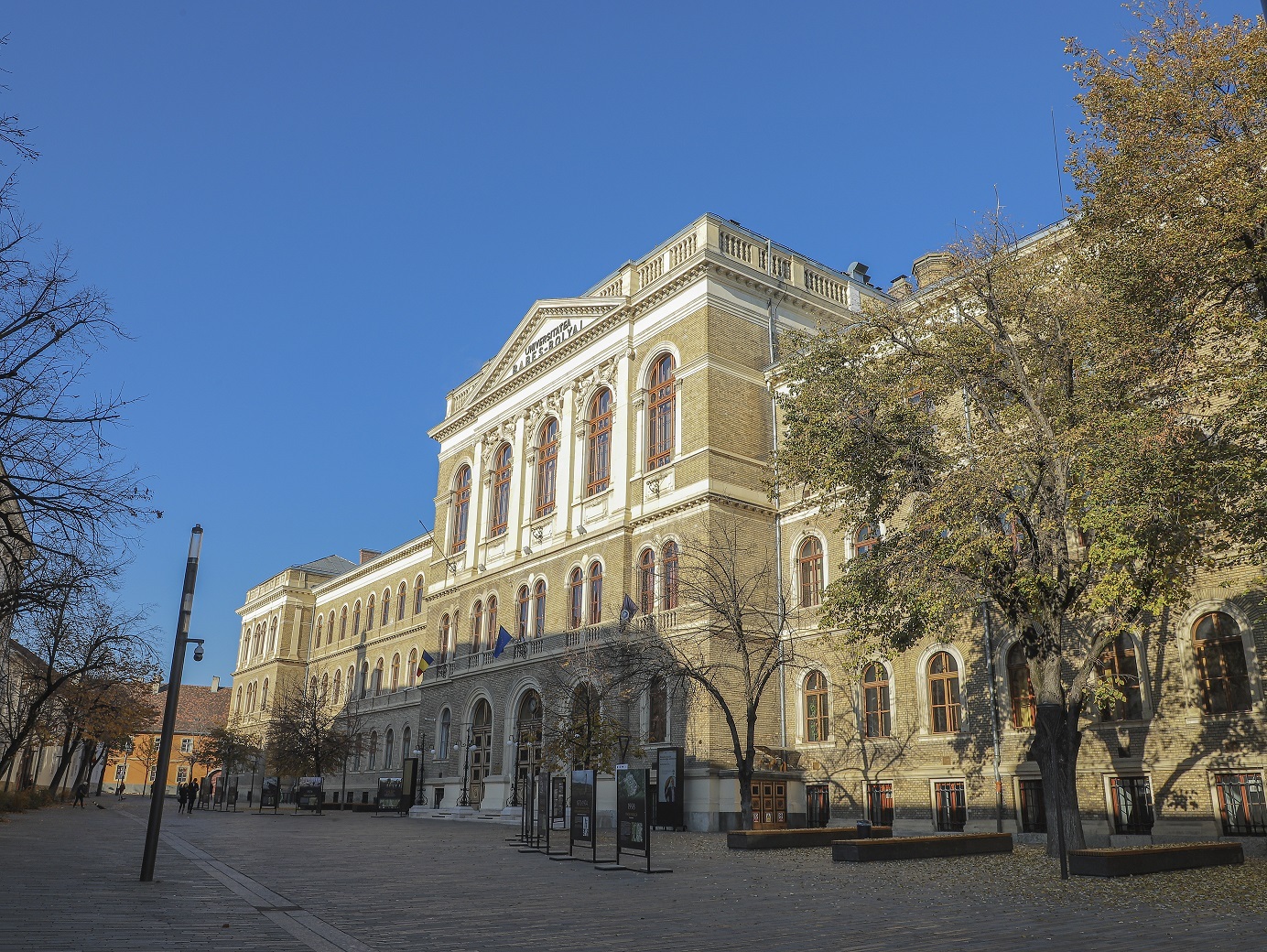
The Babes-Bolyai University is expanding its research portfolio into vaccine development against anti-microbial resistance, one of the major health challenges of our times. The competitive Marie Curie doctoral network EVADERE (www.evadere1.eu) has been funded and UBB is represented by two principal investigators from the STAR-UBB institute. Prof Andreas Bender (https://andreasbender.de), a world leading scientist in drug design, bioinformatics, and Artificial Intelligence in the life sciences, and Prof Vlad Cojocaru (https://cojocarulab.eu) an internationally recognized researcher in computational biochemistry united their expertise in a joint effort to discover new epitopes suitable for vaccine development against highly resistant bacteria.
Epitopes are small regions of bacterial proteins that are recognized and attacked by the immune system. Because resistant bacteria are evading the immune system, discovering novel epitopes becomes crucial to overcome this major health challenge. Andreas Bender and his research group are contributing artificial intelligence workflows and algorithms for predicting novel epitopes. At the same time, Vlad Cojocaru and his team are predicting how the three dimensional structure and dynamics of these epitopes contributes to the recognition of antibodies. These predictions will lead to optimized epitopes which will be validated experimentally in the EVADERE training network by the partners involved.
Marie Skłodowska-Curie Doctoral Training networks are highly competitive EU research programs with a success rate of only 10.6% (https://marie-sklodowska-curie-actions.ec.europa.eu/news/msca-awards-eu6086-million-for-doctoral-programmes). Beyond major scientific discoveries, these networks are aimed at training young scientists in a collaborative environment by providing generous funding for salary, research materials, and travelling for doctoral studies. The network’s philosophy is to foster mobility, which means that the doctoral students will not be selected from applicants which had the residence in the same country as the host institution for more than 12 months during the past three years.
Andreas Bender and Vlad Cojocaru have already started developing the new research focus in vaccine development at UBB and within the EVADERE network they are currently hiring a PhD student. Applications can be submitted here: https://evadere1.eu/jobs. This grant represents a further step in strengthening the computational life sciences research profile of Babes-Bolyai University, also in the context of an increasing focus of the university on biomedicine and related fields.
Alongside UBB, in the EVADERE network there are 13 partner institutions: University of Milano-Bicocca (Italy, coordinator), University College Dublin (Ireland), National Research Council (CNR-IBB, Napoli,Italy), Queens University Belfast (UK), CIC bioGUNE (Bilbao, Spain), St. George’s University of London (UK), Ludwig Maximilian University of Munich (Germany), HUN-REN – TTK Bionano Research Centre (Budapest, Hungary), Imperial College London (UK), CRODA Denmark, University College Cork (Ireland), Institut Pasteur Paris (France), Cyclolab (Budapest, Hungary).
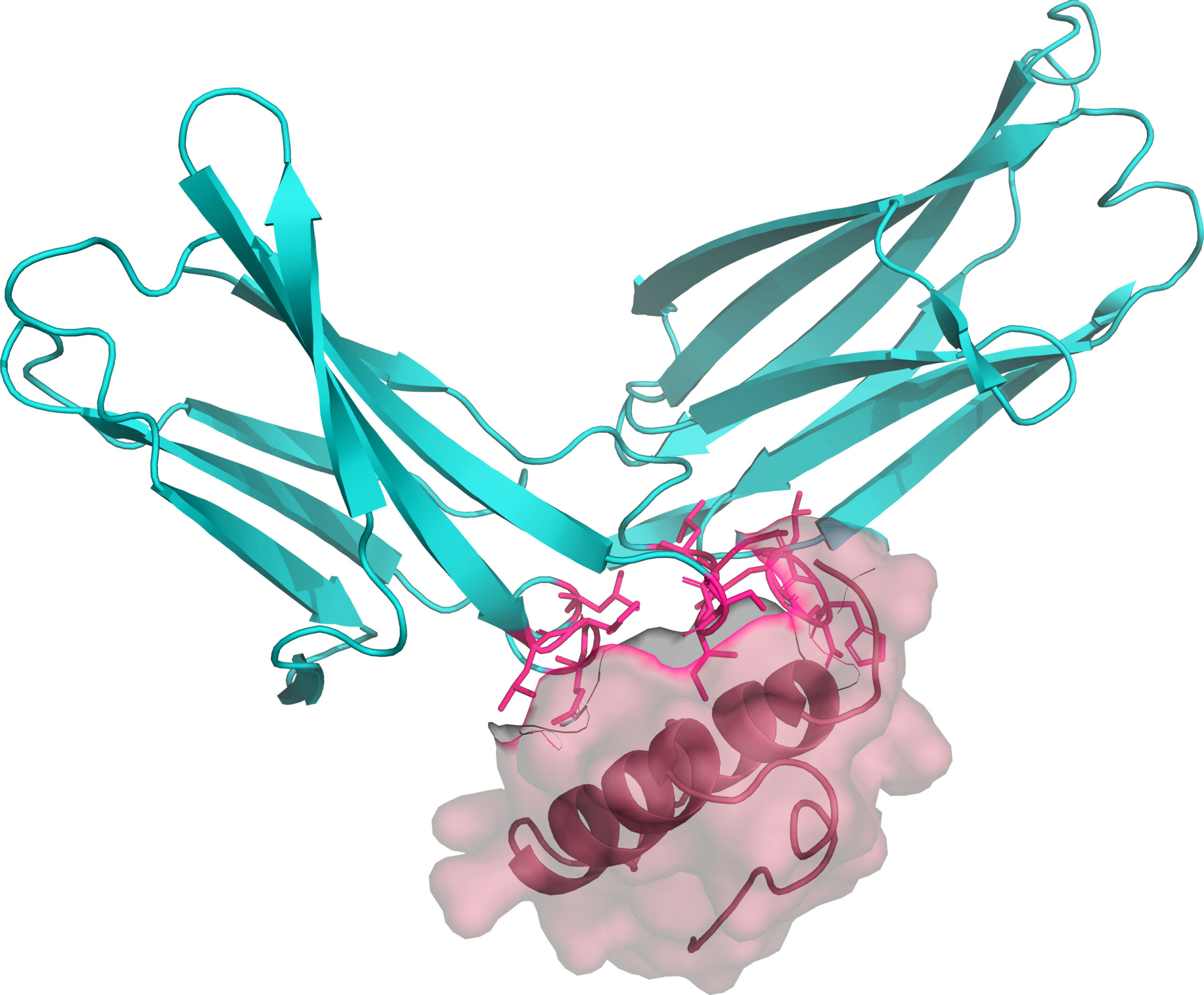
Figure
The illustration shows an example of a structure of a human antibody fragment in light green bound to a piece of a bacterial protein in pink. The residues at the interface are shown in magenta. The illustration was prepared in Pymol by Ana Lucanu, a PhD student who is establishing this research focus in Vlad Cojocaru’s group

A. Bender
V. Cojocaru
Tradition and Excellence with Culture-Science-Innovation since 1581
Babeș-Bolyai University of Cluj-Napoca (UBB) is the university with the most complex academic profile in the country (by its number of programmes and multicultural profile featuring three official academic languages: Romanian, Hungarian, and German), and with the oldest academic tradition in Romania (established 445 years ago – 1581), accounting for the largest academic community in the country (with a staff of more than 55,000 people, from 15 cities and 12 counties). Ever since its establishment, UBB has been one of the most prestigious and influential universities in Romania; for several years now, UBB has consistently ranked among the top 5% of the world’s universities (out of approximately 30,000), with an advanced academic infrastructure (e.g. RDI units integrated into European networks, up-to-date teaching laboratories integrating virtual/augmented/mixed reality through the UBB-EON-XR Centre, etc.). Recently (2021), following the international QS STAR audit, UBB was officially ranked as the first world-class university (QS*****) in Romania, and in 2020 UBB was included in the GUILD, the organisation of the most prestigious European world-class/research-intensive universities, it was awarded the European HR Award for Excellence, and as of 2021/2022 it is a member of the EUTOPIA alliance of European universities.